






































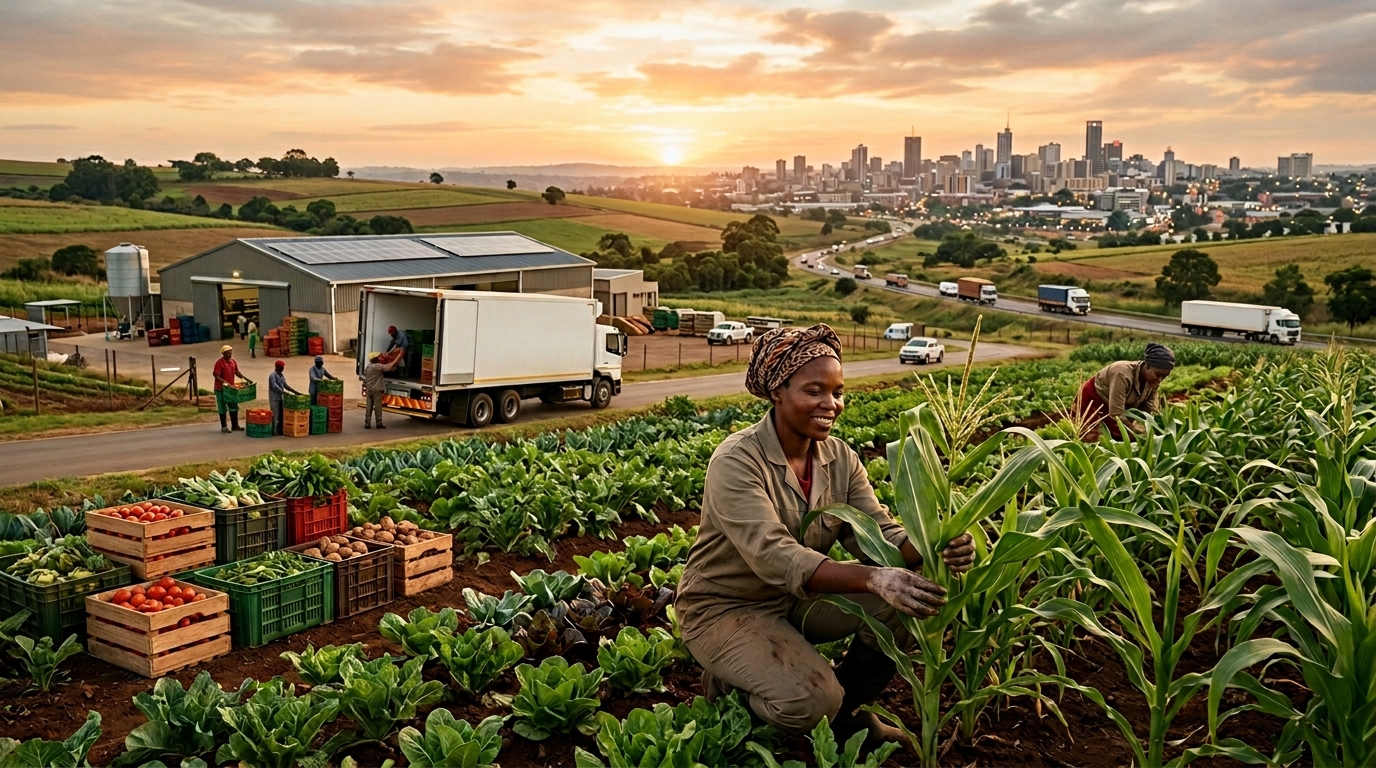
Africa is home to about 60% of the world’s uncultivated arable land. Yet the continent imports more than $50 billion worth of food every year, according to Afreximbank.
So, if Africa has so much land suitable for agriculture, why does it still depend so heavily on food imports? The answer goes beyond simply growing more food.
Farming Is Only the Beginning
Getting food from the farm to the consumer involves much more than planting and harvesting.
Farmers need access to quality inputs, financing, equipment and technology. After harvest, food needs to be stored, processed, transported and brought to market.
When any part of that chain is weak, the entire system suffers. Poor storage can lead to food losses, limited processing can leave countries exporting raw produce and importing finished products at a higher cost, while poor infrastructure can make moving food more expensive.
Africa’s agricultural opportunity, therefore, is not just about producing more. It is about building stronger value chains that allow more of what the continent produces to be processed, traded and consumed within Africa.
Beyond Food Security
Food security means having reliable access to enough safe and nutritious food. But the conversation is increasingly moving towards food sovereignty, the ability of countries and communities to have greater control over their food systems and reduce excessive dependence on imports.
For Africa, that distinction matters. Having food available is one thing. Having stronger domestic and regional systems that produce, process and distribute that food is another.
The Opportunity Is Bigger Than Farming
Agriculture supports millions of livelihoods across Africa and has the potential to create even more opportunities in food processing, logistics, manufacturing, technology and trade.
Unlocking that potential requires more than increasing production. It calls for better infrastructure, access to finance, innovation, research, supportive policies and stronger trade between African countries.
That kind of transformation will require collaboration across government, business, finance, technology, research and the agricultural sector.
Where the Conversation Continues
That is the thinking behind Agriculture Summit Africa (ASA) 2026.
Taking place on 15 and 16 September 2026, ASA 2026 will bring together leaders from government, agribusiness, finance, technology, research, development organisations and the farming community to explore how Africa can build a stronger and more resilient agricultural sector.
Under the theme “Building the Next Superpower: Africa’s Food Power Play,” the summit will explore practical ways to strengthen agricultural value chains, improve food processing and storage, expand access to finance, encourage innovation and increase intra-African trade.
More importantly, it aims to move the conversation from identifying challenges to building solutions.
Africa’s Food Future
Africa already has much of what it needs to become a stronger agricultural and food-producing continent: land, people, markets and demand.
The bigger question is whether it can build the systems, infrastructure, financing and partnerships needed to turn that potential into lasting economic value.
That is the conversation Agriculture Summit Africa 2026 is creating.
Sign-up now and be part of building Africa’s food future.