



































Have you ever gone to the market for tomatoes, heard the price and started reconsidering your meal plan? Maybe you negotiate a little, buy less than you intended or decide that you can manage with what you have at home.
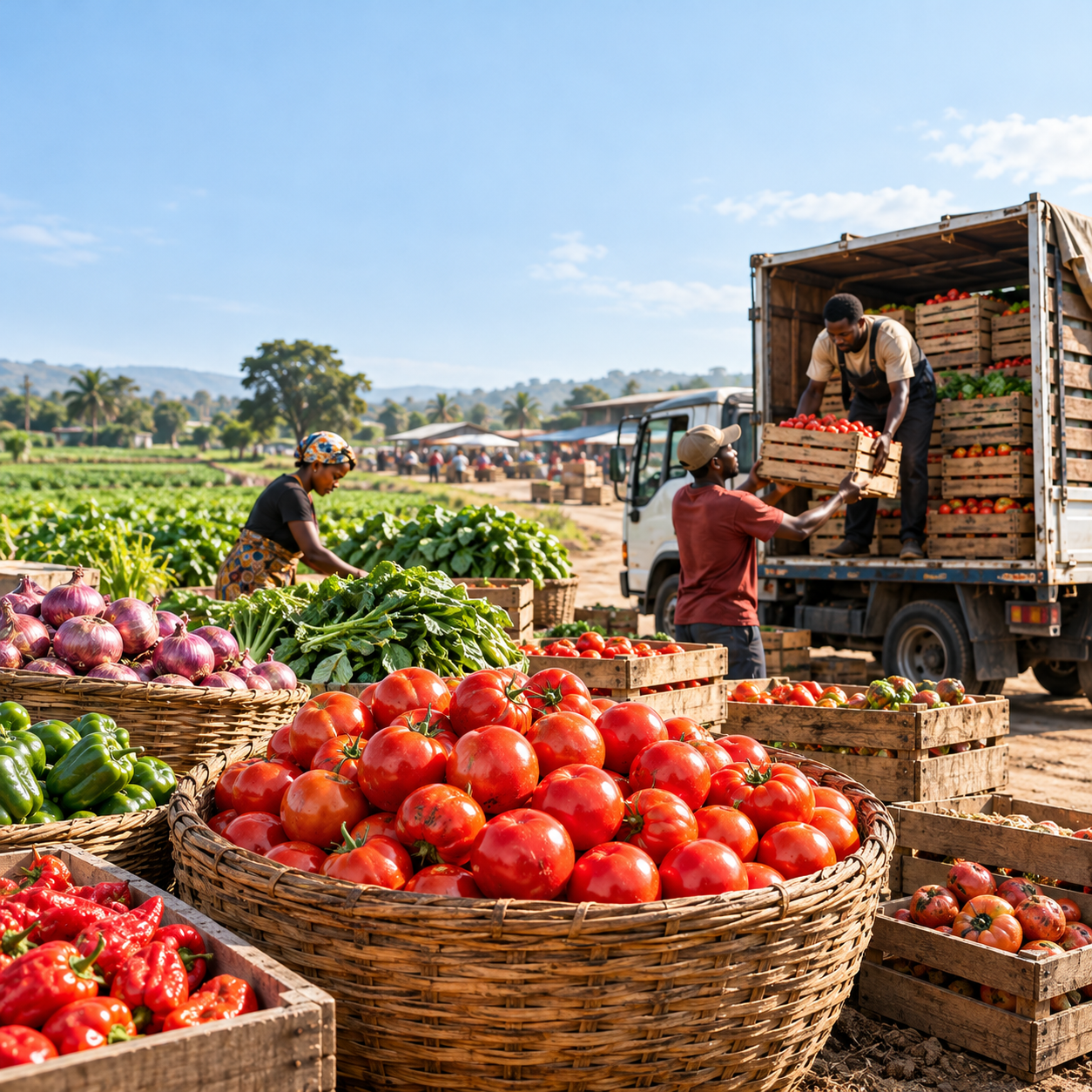
It’s a familiar experience, but there’s usually more behind that price than we realise. Someone grew those tomatoes, another person harvested them, and there’s practically a whole village of people involved in getting them from the farm to the market.
Someone has to figure out how to transport them, where to sell them and how to get them there before they spoil, because a problem at any stage can have serious consequences for everyone involved, from the farmer who grew them to the person who eventually buys them.
We mostly meet food at the point of purchase, when it’s already sitting on a market stall or displayed on a supermarket shelf, but its story starts much earlier.
From the Farm to the Market
For farmers, a successful harvest is only part of the job. The food still has to get to the people who need it, and depending on where the farm is located, that can be quite an undertaking.
Take tomatoes and peppers, for instance. They’re fresh produce, which means they can spoil if they spend too long in transit or aren’t stored properly.
Poor roads, limited storage facilities and rising fuel costs can make transportation more expensive and unpredictable, leaving farmers and traders to deal with the cost when things don’t go as planned.
And that’s before you consider everyone else involved in getting the produce to market.
The trader buying from the farmer has transportation and market fees to think about, the transporter has fuel and vehicle maintenance to cover, and the retailer still needs to make a living.
By the time you arrive at the market to buy a few tomatoes for your stew, all these costs have become part of the price you’re paying.
So, when food gets more expensive, what happens on the farm is only one part of the story. How that food gets to you matters too.
When Food Doesn’t Make It
Of course, not everything that leaves a farm makes it to someone’s kitchen.
Some produce gets damaged during harvesting or transportation, some spoils because there isn’t suitable storage available, and some remains unsold.
The United Nations Environment Programme identifies food loss and waste as a major challenge for food systems around the world, and it’s easy to see why the consequences extend beyond the food itself.
When produce goes to waste, so do the water, land, energy, labour and money that went into growing it and getting it to market.
For a farmer or trader, that could mean losing money despite putting in the work, while the food itself never gets to the people who could have bought and eaten it.
It also means that producing more food isn’t the only answer to food insecurity; we need better ways to store, transport and distribute what we already grow.
There’s a Whole System Behind Your Meal
Think about the last meal you ate, whether it was rice and stew, a bowl of soup or something you picked up on your way to work.
Before it got to your plate, several people had already played a part in making it possible, and the systems connecting them helped determine how much you paid for it and whether it arrived in good condition.
We don’t often think about these things because most of the work happens out of sight.
We see the food at the market or on our plates, not the roads it travelled, the people who handled it or the produce that never made it that far.
But all these things shape our experience of food, from what’s available to buy to what we can afford and how much ultimately goes to waste.
This World Food Day, it’s worth looking beyond the meal itself and thinking about what it takes to get it to our tables.
Growing the food is important, but so is making sure it can travel from the farm to the people who need it, with fewer losses and costs along the way.