


































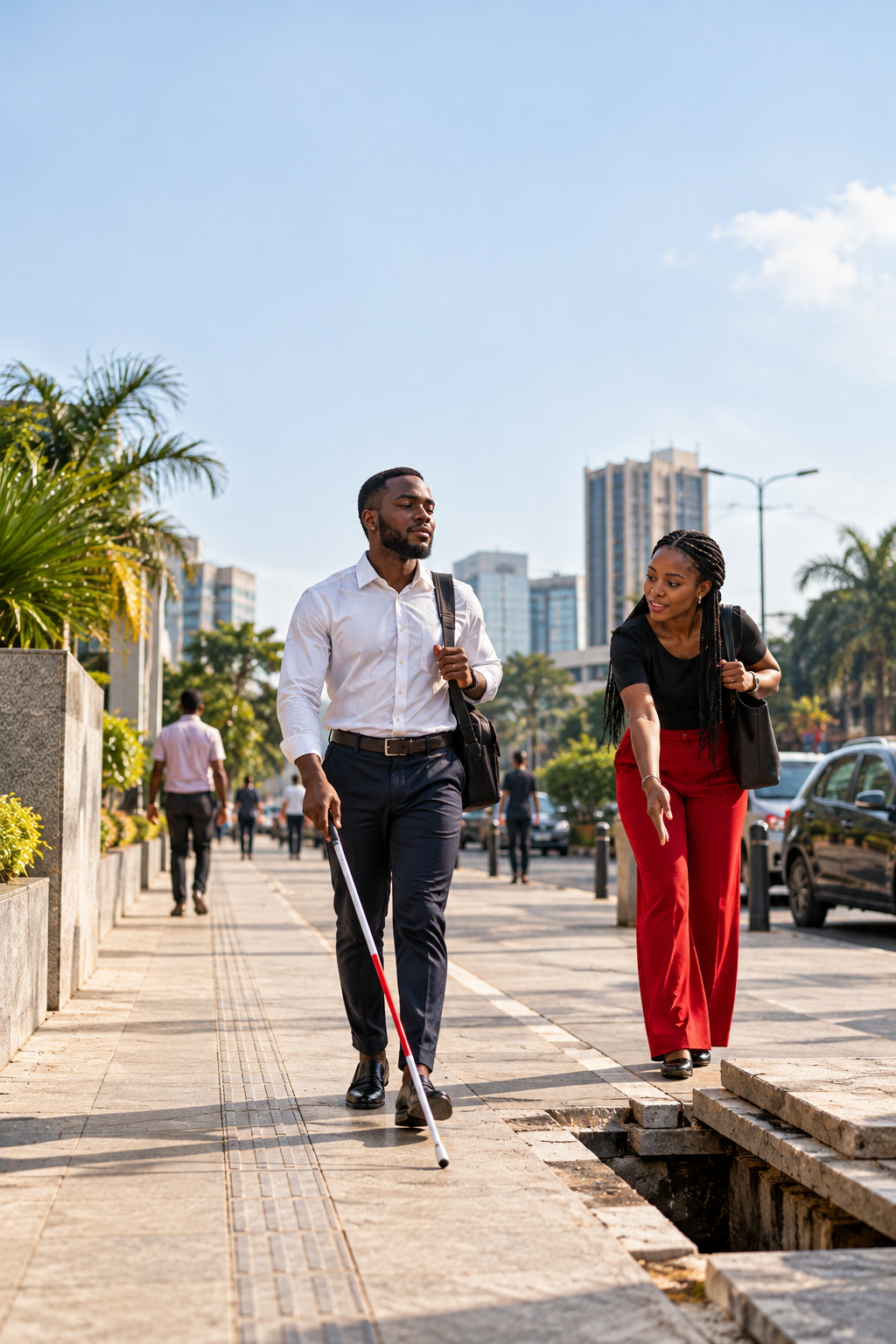
Giving directions seems simple enough. Someone asks where to go, you point them in the right direction and tell them to keep moving. But how useful are those directions to someone who cannot see what you’re pointing at?
One morning, I was heading to the office and, as usual, I was in a hurry. I asked someone for directions, and the response was, “Go straight.”
I started moving until someone ahead began shouting, “Eeeh! Eeeh! Eeeh!” I stopped, unsure what I was supposed to be avoiding. A person? A car? Someone eventually came to help, and I discovered there was an open drainage right in front of me.
The person who gave me directions hadn’t necessarily pointed me the wrong way; they had simply left out the one detail that mattered. And the frantic shouting wasn’t much more useful. If there’s danger ahead, telling someone what it is and where it is makes all the difference.
A White Cane Is Not Google Maps
A white cane helps blind people detect obstacles and navigate their surroundings independently, but it cannot reveal everything further ahead, whether it’s a blocked walkway, a parked car or an uncovered drain.
Sometimes, helping is as simple as giving clearer directions: explain where to turn, describe the obstacle ahead or tell the person how far they need to walk.
If they need physical assistance, ask before grabbing their arm or attempting to guide them. The goal is to help, not take over.
Sometimes, the Environment Is the Problem
We often focus on how people with disabilities navigate the world without paying enough attention to the world they’re expected to navigate. Blocked walkways, uncovered drains and poorly designed public spaces make everyday movement more difficult, especially for people with visual impairments.
A white cane does not mean the person holding it is helpless. They could be heading to work, going to school or simply trying to get somewhere on time, just like you are.
They may need help, or they may not; the best approach is to ask rather than assume.
Accessibility also means creating spaces people with different needs can navigate safely and independently.
And for the rest of us, it can start with something as simple as giving useful directions instead of pointing vaguely or shouting a warning without explaining the danger.