


































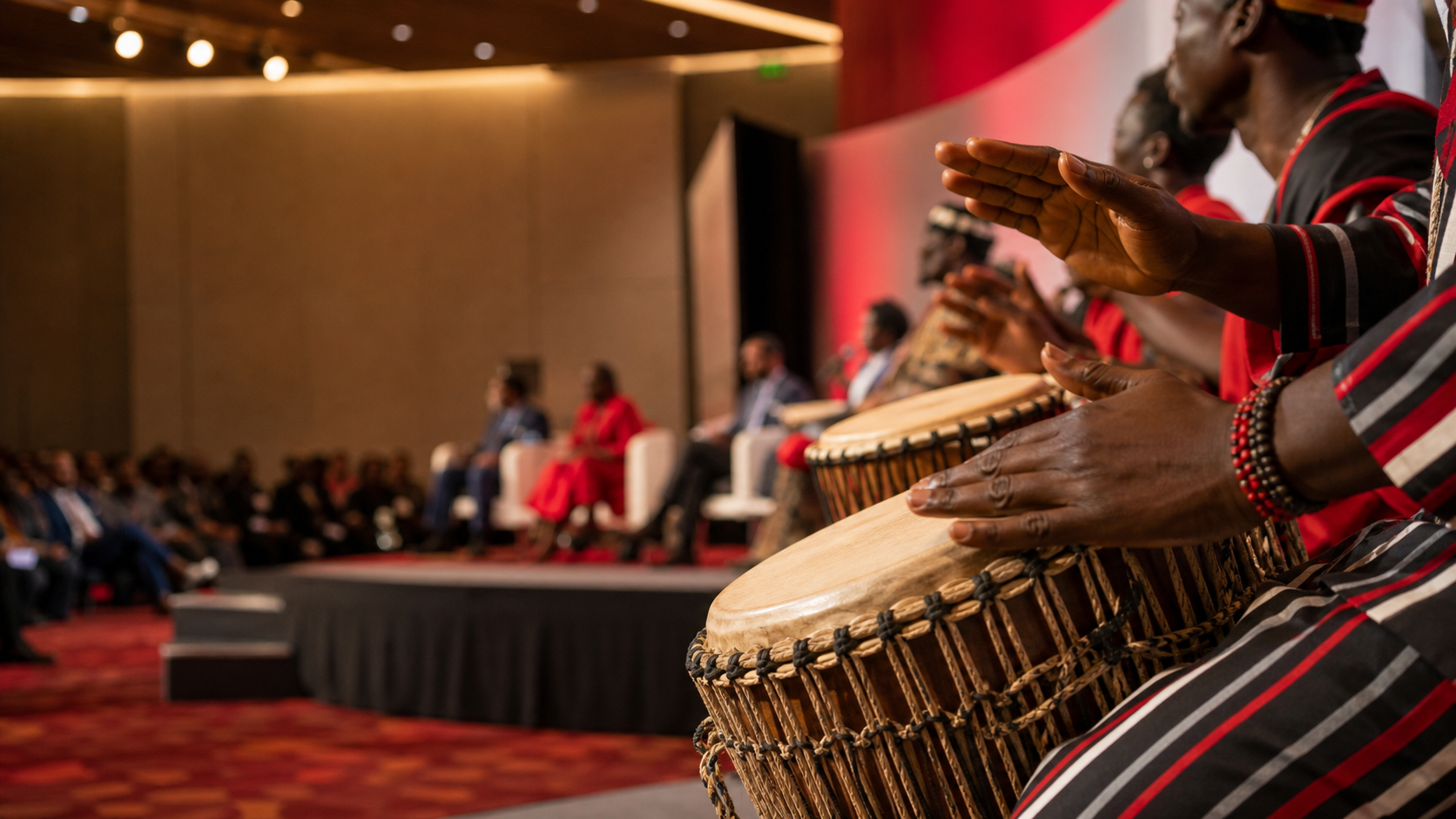
The drums started, and just like that, the room changed.
Loud cultural drums filled the space as the stage play began. The sound was impossible to ignore. It pulled everyone’s attention towards the stage, where the story that followed brought together culture, movement and the realities of development in a way that felt both familiar and thought-provoking.
I had already spent hours at the Africa Social Impact Summit 2026 by then.
We had listened to speakers. We had sat through conversations. We had eaten lunch. We had discussed ideas around financing and development. But somehow, this was the moment that brought everything together for me.
One of the biggest takeaways from the play was simple: Financing for development is a recipe for progress. It was a line that stayed with me because, by that point in the day, I had begun to see how much of the summit’s conversation came back to the same idea that Money matters. But what we do with it matters just as much, how we bring people together to use it effectively may matter even more.
But I am getting ahead of myself.
Day One of the Africa Social Impact Summit did not begin with the drums. It began much earlier that morning.
It Started With a Conversation About Partnerships
The Africa Social Impact Summit 2026, themed “Financing for Development: Building Resilience, and Transforming Emerging Economies,” brought together people from different parts of the development ecosystem to discuss one of the continent’s biggest questions: how do we finance the kind of development that can withstand today’s challenges and create a better future?
From the beginning, it was clear that no single sector could answer that question alone.
In her opening remarks, the Head of the Civil Service Commission, Mrs. Didi Esther Walson-Jack, spoke about the willingness of the civil service to partner with others in ways that can improve the lives of Nigerians.
It was an important point to start with because when we talk about development, it is easy to imagine that the responsibility belongs to government alone.
It doesn’t. Yes, the government has a role. So does the private sector, foundations, civil society organisations, development partners and, ultimately, the people who live with the outcomes of these decisions every day.
We Need to Stop Working in Silos
This became even clearer during a panel session led by Odunayo Sanya, Executive Director, MTN Foundation. The conversation focused on partnerships that inspire and what can happen when organisations stop working separately and start working together.
Over the years, the MTN Foundation has invested more than N32 billion across Nigeria, but the interesting part of the conversation was not simply the size of the investment. It was what happens when that investment meets partnerships on the ground.
Representatives from primary healthcare centres spoke about their experiences, while beneficiaries of MTN Foundation-supported interventions shared perspectives on the difference these efforts have made. Their stories added something that statistics alone cannot provide: Context.
A foundation may have the resources. A healthcare worker may understand the problem. A government agency may have the reach. A community may know exactly what solution it needs.
Bringing those pieces together is where real impact can begin.
Financing Is Only the Beginning
The day’s conversations around financing for development brought the theme of ASIS 2026 into sharper focus.
Financing for Development: Building Resilience, and Transforming Emerging Economies.
It is a broad theme, but the conversations throughout the day made it feel more practical.
Financing development is not simply about finding money. It is about deciding where that money goes. It is about investing in systems that can survive beyond one project cycle. It is about supporting ideas that already work and helping them reach more people. It is about creating partnerships that allow resources, knowledge and expertise to move in the same direction. And it is about asking a difficult question: Are we financing solutions, or are we simply financing activities?
Don’t Leave Without Ten New Contacts
At some point during the day, the MC, Osca Oyinsan, challenged attendees to collect at least 10 new contacts before leaving the summit. It sounded like a simple networking challenge to me. But when I thought about it further, it also captured something important about why gatherings like ASIS matter.
Sometimes, the solution you are looking for is sitting in the same room.
The person beside you may be working on a problem you’ve been trying to solve. Someone you meet during a coffee break may introduce you to an organisation that can help take your idea further. A conversation that lasts five minutes could eventually become a partnership that lasts years.
Of course, collecting 10 contacts is the easy part. The real work begins after the event.
Then Came the Drums
After a morning of conversations about policy, financing, partnerships and development, the drums brought everything back to something more familiar: A story. A culture. People.
The issues we discuss in conference rooms may sound complex, but the reason they matter is because they affect real people.
The financing decisions we make affect whether a health centre has what it needs. The partnerships we build can determine whether an idea reaches one community or hundreds. The investments we make today can shape the opportunities available to people tomorrow.
The drums eventually stopped and the stage play ended, but the question it left behind was bigger than the performance itself. If financing for development is a recipe for progress, then perhaps the real challenge is figuring out how to bring the right ingredients together.