






When thoughts around a bank’s carbon footprint come to mind, it’s always those of office buildings, air conditioning systems, business travel, paper consumption and in the case of Nigerian companies, emissions from generators. While these are important, they represent only a small fraction of a bank’s overall environmental impact.
The bigger question is: What activities are being financed?
Every loan a bank provides supports a business, project or economic activity. Whether it is financing a solar power plant, a manufacturing facility, a transport company or a commercial building, that financing has an environmental footprint. Collectively, the emissions associated with these lending activities are known as financed emissions. For most financial institutions, financed emissions account for the overwhelming majority of their total emissions footprint—often more than 97% and in some cases over 99%.
Therefore, if the issue of managing climate transition risks remains an important one, the concept of decarbonizing the loan book has to be factored at some point.
What Does Decarbonizing the Loan Book Mean?
Simply put, decarbonizing the loan book means gradually reducing the carbon intensity of a bank’s lending portfolio over time.
It does not necessarily mean immediately stopping financing to every business with emissions. Rather, it means understanding where emissions are concentrated, supporting customers as they transition to more sustainable practices and increasing financing for activities that contribute to a low-carbon and climate-resilient economy.
In practical terms, this may involve:
- Financing more renewable energy
- Supporting energy-efficiency
- Funding climate-smart
- Encouraging customers to adopt cleaner
- Working with high-emitting sectors to develop credible transition
As the International Energy Agency notes, successful transitions require finance to “go where the emissions are.” Simply avoiding high-emitting sectors does not reduce real-world emissions; helping businesses transition does.
Why Does It Matter?
The first reason is risk management.
Climate change is no longer just an environmental issue. It is increasingly becoming a financial one. Floods, droughts, extreme heat, changing regulations and shifting consumer preferences can all affect the ability of businesses to operate and repay loans.
For example, a prolonged drought may reduce agricultural yields, affecting the revenues of farming businesses. Similarly, companies that fail to adapt to changing environmental regulations may face higher costs or reduced competitiveness.
By understanding these risks early, banks can make better lending decisions and support customers in building resilience.
The second reason is opportunity.
The transition to a more sustainable economy is creating new markets and investment opportunities. Renewable energy, clean transportation, energy-efficient buildings, sustainable agriculture and climate adaptation solutions are attracting growing levels of investment worldwide. The World Bank alone delivered a record US$42.6 billion in climate finance in 2024, highlighting the increasing scale of capital flowing into climate-related investments.
Businesses that are prepared for this transition are often better positioned to access new markets, attract investment and remain competitive.
What Does This Mean for Customers?
For customers, decarbonization should not be viewed as an additional burden. Instead, it is an opportunity to future-proof operations and strengthen long-term business performance.
Businesses that understand their environmental impact, manage resource consumption efficiently and prepare for climate-related risks are often better positioned to navigate changing market conditions.
Customers may increasingly be asked questions about energy use, emissions, environmental management practices or climate-related risks. These are not simply compliance exercises—they help demonstrate that a business is prepared for the future.
As the saying goes: “What gets measured gets managed.” By understanding environmental impacts today, businesses can identify efficiencies, reduce costs and unlock new growth opportunities tomorrow.
Looking Ahead
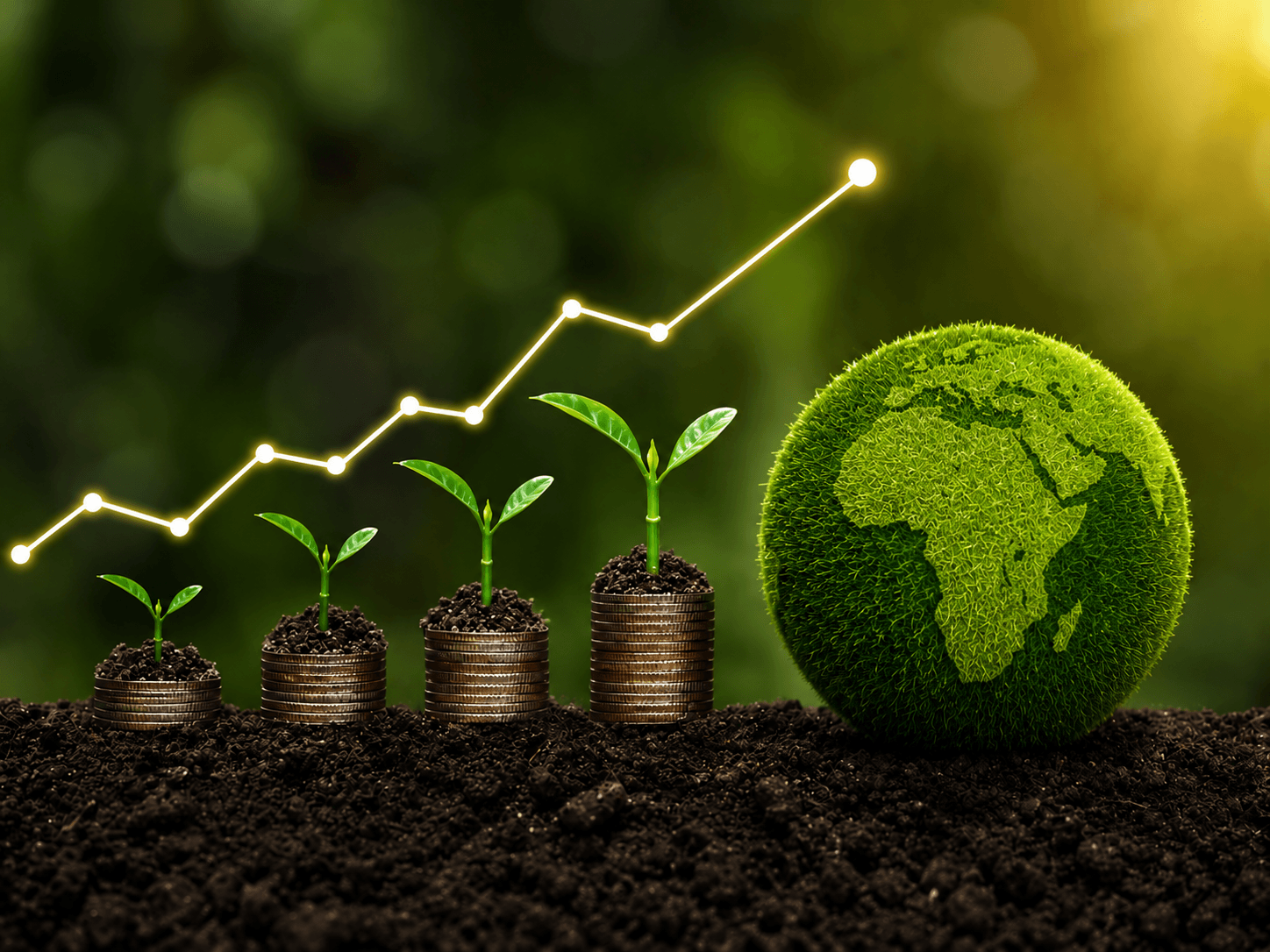
Decarbonizing the loan book is ultimately about supporting sustainable economic growth. It is not about reducing lending; it is about directing capital towards activities that create long-term value while managing emerging risks.
Banks have a unique role in shaping the future because every financing decision influences the economy. By supporting customers on their transition journeys, financial institutions can help build a more resilient, competitive and sustainable future for businesses, communities and the wider economy.
In the years ahead, the question will not simply be whether businesses are profitable today, but whether they are prepared for tomorrow. Decarbonizing the loan book is one way of helping ensure that they are.
Author: Ifeanyi Nnoluka