


Every day, without really thinking about it, we interact with an economy that runs on informality. The suya seller who wraps your order in old newspaper and collects cash with no record of the sale. Mama Toyin at the corner shop who has been running her business for fifteen years but has never had a bank account in its name. The okada rider who earns daily, spends daily, and has nothing left at the end of the week — not because he doesn’t work hard, but because there is no system around him designed to help him save, grow, or protect what he earns.
We walk past these realities every day and rarely stop to name what they represent. This is financial exclusion; the lived economic reality of tens of millions of Nigerians who are fully productive and completely underserved at the same time.
Somehow, Nigeria has made real progress in closing it’s financial exclusion gap. According to EFInA’s 2023 survey, roughly three in four Nigerian adults now access some form of formal financial service, up from just over half in 2020. But the gaps that remain are not so small, and are unevenly distributed. Rural communities are excluded at more than twice the rate of urban ones. Women’s access to formal financial services sits nearly twelve percentage points behind men’s; one of the largest gender gaps in sub-Saharan Africa, and one that has been widening, not closing. The International Monetary Fund (IMF) estimates that closing gender gaps in financial access alone could generate GDP gains of up to 35% in countries with large disparities.
Agent banking has played a key role so far in bridging Nigeria’s financial future which entailed deploying agents into communities where branches could never be commercially justified, and this worked. Today, the remaining inclusion gap does not yield to the same solution. The people still outside the system are not simply far from a branch. They are far from products already designed for them, far from institutions that have shown up in their world, and far from a banking experience they have every reason to trust. Closing this gap requires something more deliberate, more targeted, and more human than infrastructure alone.
This is where Sterling’s approach diverges.
At Sterling, we reach where it matters most. The HEART Sector— Health, Education, Agriculture, Renewable Energy, and Transportation — is premised on financing sectors that every day Nigerians play in so rather than offering financing to only government, corporate and institutional clientele we reach those sectors who will not typically walk into branches. We go to them with financial solutions designed for them.
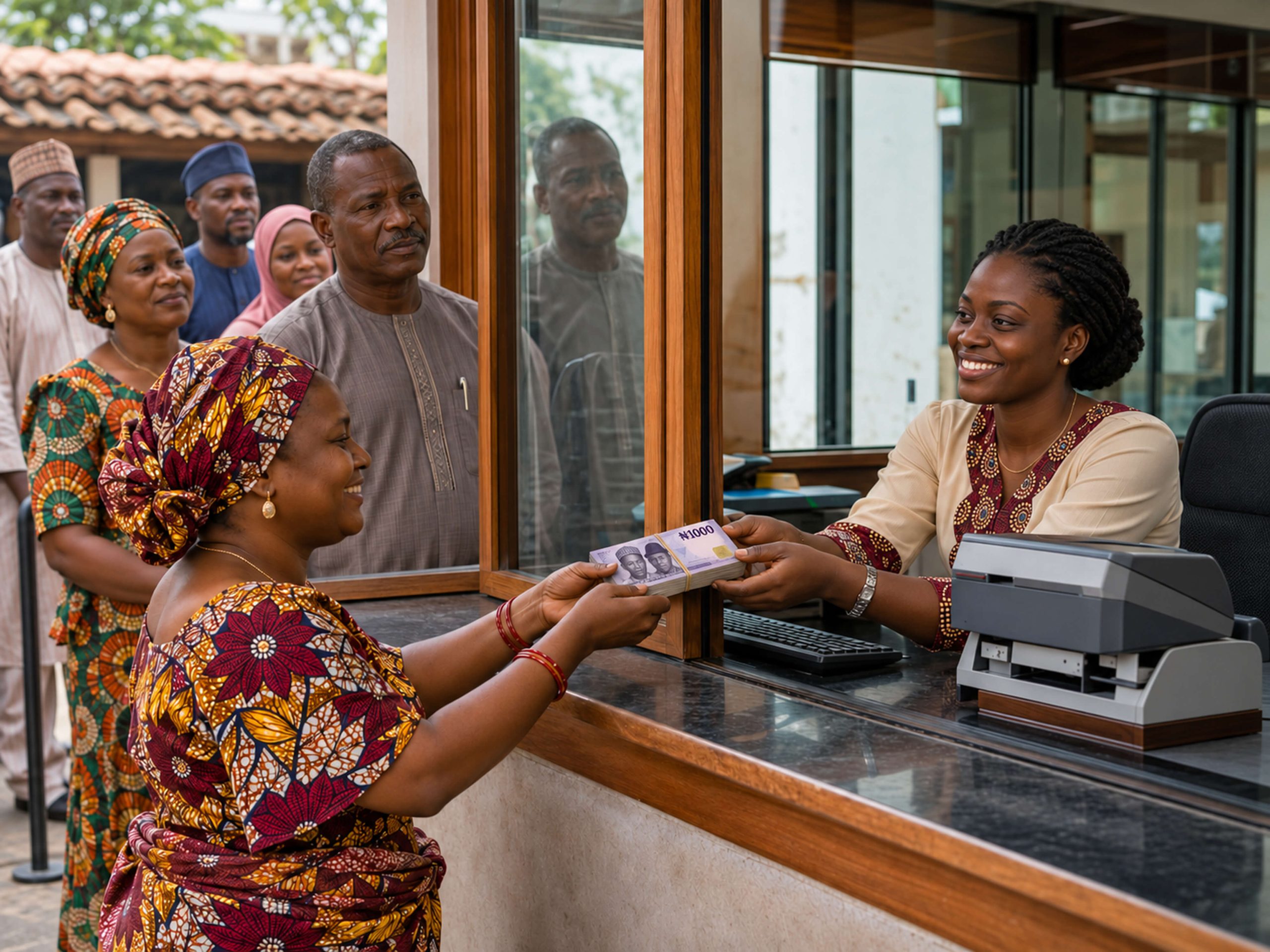
While originally designed as a cross-cutting merchant solution; Getpayed is being used by our trained agents to conduct transactions in markets, motor parks, and communities across the country reaching people in areas where formal banking has never had a physical presence. The informal merchants can make deposits of their daily cashflow, transact regularly and have the Sterling experience. For many of our customers interacting with us through an agent interaction, it is the first time the formal financial system has ever met them where they are.
For women specifically, we go further. Through One Woman and the Sterling Women Business Support Facility(BSF), we continue to provide working capital financing designed around the actual financial lives of female entrepreneurs many of who are micro-business owners accessing formal credit for the very first time.
Numerous real time market activations in trading communities across Nigeria has also helped us deepen our footprint in reaching Nigerians. Our teams open first-time accounts for petty traders trading regular commodities such as peppers and tomatoes, issue free ATM cards, and make sure that a seamless banking experience is not a privilege reserved for those who already have access to one.
What we want our One Customer to know
As our One Customer already experiencing what Sterling’s digital banking, Lending products, and service channels can do there is a role here for you too. The gateman, the domestic staff, the auxiliary workers whose labor your business depends on daily could be outside the financial system and extending it to such people around you makes all the difference. Opening accounts for your staff, deploying a Getpayed POS at your premises will costs you very little but changes a great deal for them.
Financial inclusion does not only happen at the frontier. Sometimes it starts with someone who already banks well, deciding that the people around them should too.
The social dividend of getting this right does not show up on a single balance sheet. It shows up in women who build financial independence, and in an economy that grows from the ground up. That is the standard we are building toward and it is the only kind of sustainability that lasts.
Author: Adaora Ikegwuonu, Environmental and Social Risk Analyst.